ChatGPT traffic dropped in GA4? Audit the October tracking gap
A tracking failure from October 8 to 15 distorted ChatGPT referral reporting. Here is how to investigate the gap without making the wrong growth decisions.

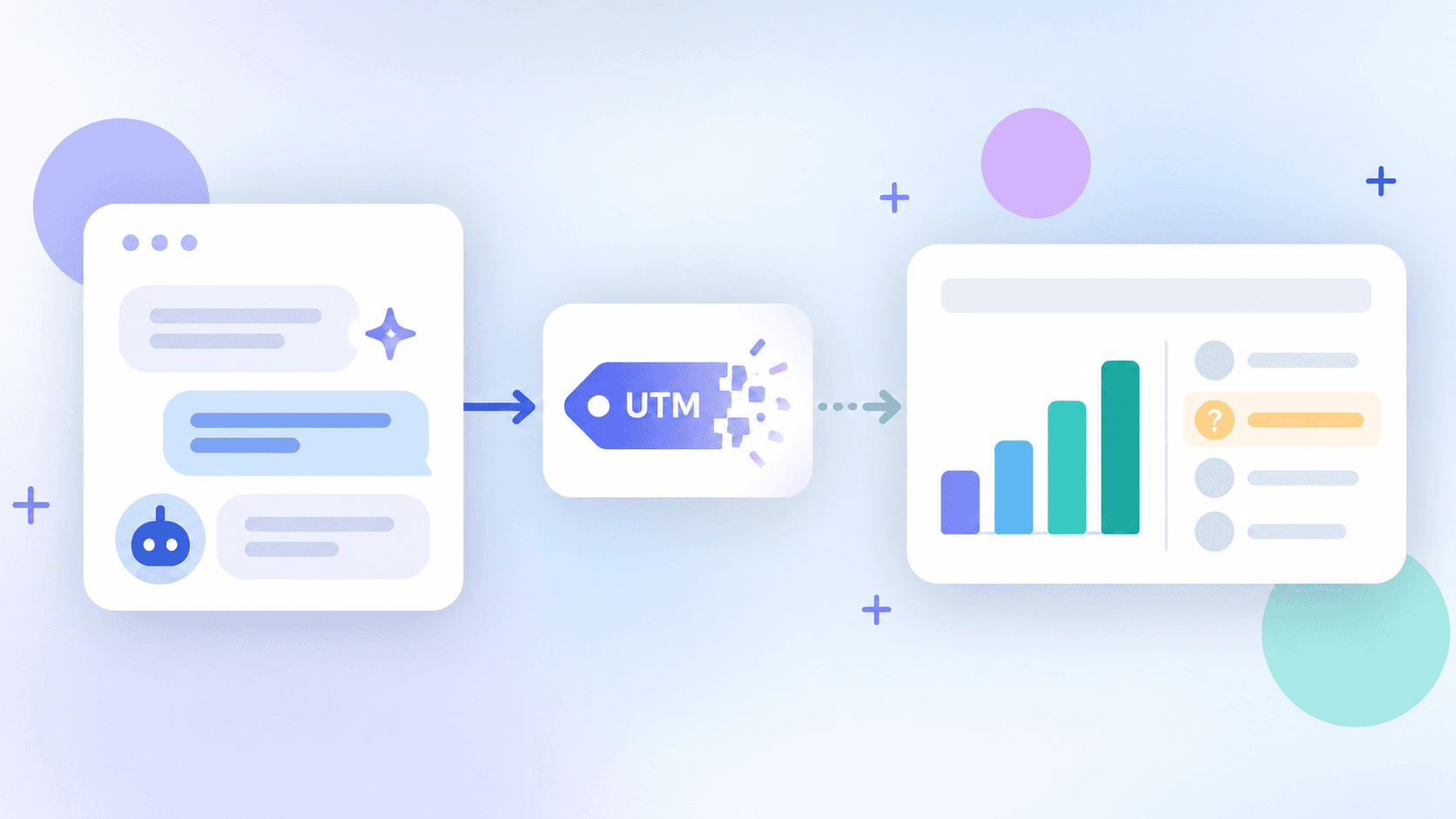
ChatGPT referral traffic appeared to fall sharply between October 8 and 15, 2026, but the strongest available evidence points to an attribution gap rather than an equivalent collapse in visits. Some ChatGPT links arrived without the source parameter normally used to identify them, which could leave GA4 with too little information to classify the session correctly.
For growth teams, the immediate risk is a bad decision based on a misleading channel report. Before reducing investment in AI visibility or content, investigate where the affected visits may have been recorded and whether qualified demand actually changed.
What happened to ChatGPT referral tracking?
OpenAI's publisher FAQ states that ChatGPT adds utm_source=chatgpt.com to referral URLs. Between October 8 and 15, 2026, some outbound links reportedly arrived without that parameter.
The missing parameter mattered most when usable referral information was also absent. Google's campaign and traffic-source documentation explains that GA4 uses campaign values and referral information to determine a session's source. If those signals are unavailable, the visit may be classified differently, including as Direct.
In its October 16 analysis, Webflow reported an average 47% decline in ChatGPT-attributed traffic across the customer sites included in its dataset. Webflow also observed recovery after the tracking issue was addressed.
That is evidence of a measurement disruption. It does not prove that every website lost 47% of its ChatGPT traffic, or that every missing referral moved into Direct.
Why could ChatGPT visits appear as Direct traffic?
GA4 needs a source signal to identify where a session began. A campaign parameter can provide that signal. Browser referral information can provide another.
When neither is available, GA4 cannot recreate the original source from intent alone. Google's default channel group definitions include an AI Assistants channel for recognised AI sources, but a channel rule cannot recover information that was never collected.
The commercial problem is simple: the visit can still happen while its origin becomes difficult to identify. A reporting decline may therefore reflect weaker source detection, weaker demand, or a mix of both.
How to audit the October gap in GA4
The goal is to test whether your data is consistent with a classification problem. It is not to manufacture a corrected ChatGPT number.
Isolate the affected dates
Start with October 8 to 15, 2026. Compare that period with suitable earlier dates, matching weekdays where practical. Record the GA4 property time zone so the comparison can be repeated.
Review Session source / medium and the relevant session channel dimensions. Keep the original source values visible instead of relying only on a broad channel group.
Find pages with a history of ChatGPT referrals
Use the period before October 8 to identify landing pages that regularly received ChatGPT traffic. These pages form a more relevant investigation set than the whole site.
A site-wide rise in Direct traffic could come from bookmarks, untagged campaigns, returning visitors or another tracking change. Restricting the analysis reduces that noise, although it does not eliminate it.
Compare source movement and total demand
For each relevant landing page, compare:
- ChatGPT-attributed sessions before and during the incident.
- Direct sessions across the same periods.
- Total sessions from all sources.
- Engagement and key events.
- Qualified leads, purchases or revenue where available.
A simultaneous fall in identifiable ChatGPT traffic and rise in Direct traffic is consistent with misclassification. It is not proof that the Direct sessions are the same visitors.
Use a comparison group
Check similar pages that historically received little ChatGPT traffic. If Direct traffic increased across both groups, the explanation may involve a broader acquisition or measurement change.
Also review other AI referral sources. Webflow reported that its observed decline was concentrated in ChatGPT, but your website may show a different pattern.
Check business outcomes before changing strategy
A channel decline should not automatically trigger a content or budget cut. Review whether affected landing pages also lost qualified leads, orders or revenue.
Stable outcomes alongside a source-classification change support further investigation. A genuine fall in total visits and conversions calls for a wider diagnosis.
For a broader measurement framework, see our guide to AI search visibility.
Why the missing traffic cannot simply be added back
Consider a hypothetical B2B software company. Before the incident, one product page receives 100 ChatGPT-attributed sessions and 200 Direct sessions in a comparable period. During the affected period, ChatGPT sessions fall to 45 while Direct sessions rise to 250.
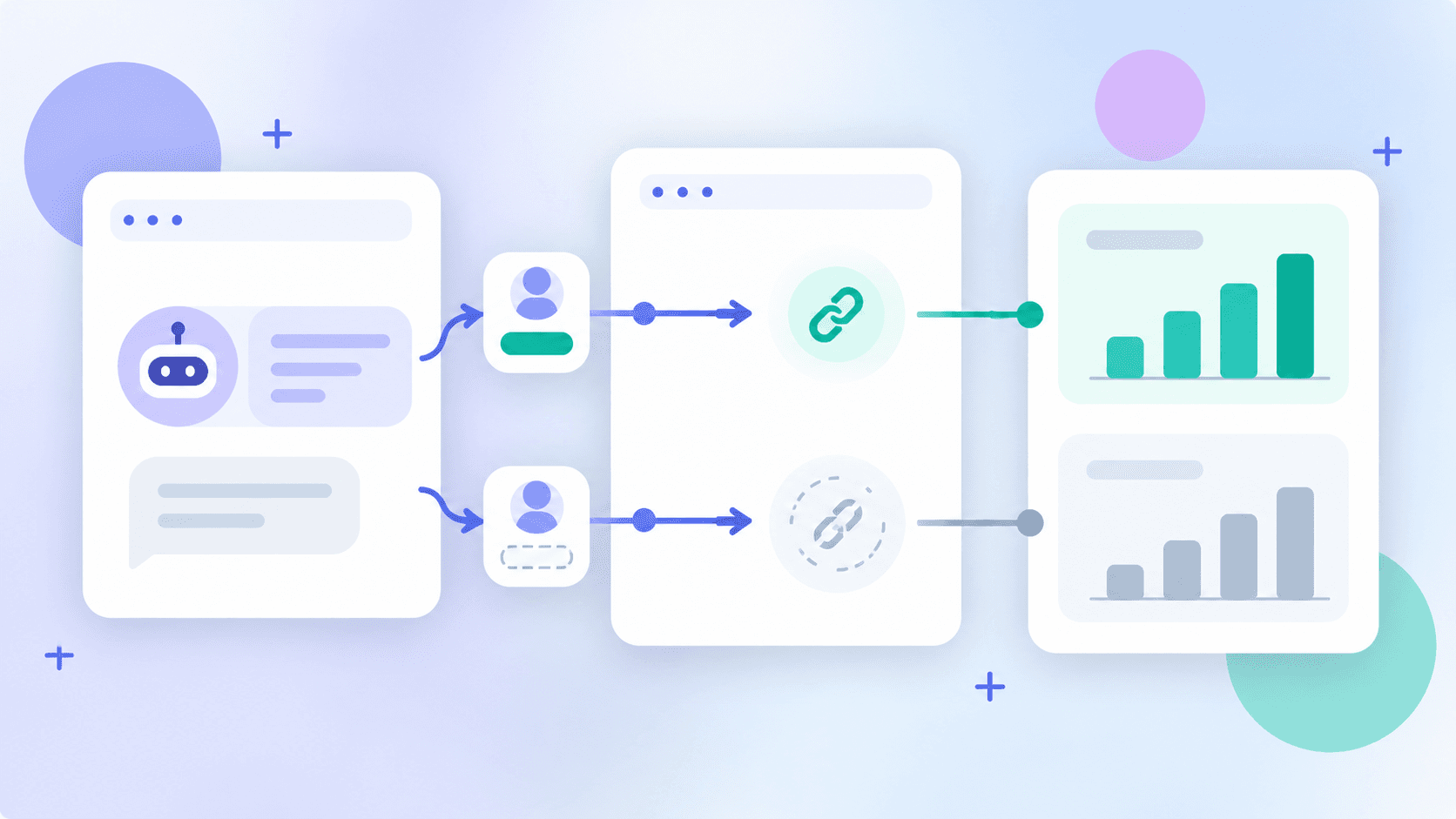
The pattern is consistent with some ChatGPT traffic being classified as Direct. It would still be wrong to declare that exactly 50 ChatGPT visits were recovered. Some Direct visitors may have arrived independently, other sources may have changed, and normal variation remains.
A defensible report preserves the original GA4 figures. It describes the observed movement, the suspected cause and the remaining uncertainty.
How should October AI reporting change?
Document the incident as a measurement limitation. Preserve the original data and add a note to October reporting rather than silently replacing sessions with an estimate.
Separate three questions:
- Visibility: Was the brand still appearing in relevant AI answers?
- Traffic: How many website sessions could analytics identify as coming from ChatGPT?
- Business impact: What happened to qualified leads, orders and revenue?
Each question needs different evidence. Visibility tools can observe mentions or citations, but they do not prove website visits. GA4 reports identifiable sessions, but it cannot reliably assign a source when the required signal is missing. Business systems show outcomes, although they may not reveal the original discovery channel.
Our guide to choosing useful KPIs explains why a report should focus on measures that can change a decision.
What this means for GEO and AEO measurement
The October gap exposes a broader limitation in AI search measurement. Referral reporting partly depends on how an external platform constructs and opens links. That behaviour can change without any modification to your website.
A practical system therefore needs more than one signal. Use referral analytics for identifiable traffic, monitor visibility and citations separately, and evaluate commercial outcomes in your own conversion records.
Server logs can help investigate requests and technical behaviour, but they cannot reliably reveal the original source of every human visit when that information is absent.
ConversionNest's view: AI referral traffic is an observed measurement, not a complete census of AI-driven demand. When source identification fails, report the uncertainty before changing investment.
What should marketers do now?
Review October 8 to 15, compare affected landing pages, document the anomaly and preserve the original data. Then ask the commercial question: did qualified demand and business outcomes change?
If the evidence points mainly to attribution failure, changing your GEO or content strategy would be premature. The better outcome is a reporting process that can distinguish a real demand shift from a measurement problem.
Frequently asked questions
Why did ChatGPT traffic drop in GA4 in October 2026?
Some ChatGPT links reportedly stopped carrying the usual UTM source parameter between October 8 and 15. When referral information was also unavailable, GA4 could classify affected visits differently.
Did ChatGPT really send fewer visitors?
The available evidence does not establish an equivalent decline in actual visits. A tracking failure explains at least part of the reported decrease, although individual websites may also have experienced genuine changes.
Can I recover the missing ChatGPT sessions in GA4?
You can estimate the likely scale by comparing historical landing-page patterns and Direct traffic movement. You generally cannot identify and reassign every affected session without a reliable original source signal.
Should I change my GEO strategy because ChatGPT traffic fell?
Not from the channel decline alone. Investigate the tracking gap, compare relevant landing pages and review qualified leads or revenue before changing strategy.

Sima Damar Beygu
Founder of ConversionNest. 10+ years in growth marketing, managing 300K euro monthly media budgets and scaling acquisition across 15+ markets. Google and Meta certified.
Sima on LinkedIn
Meta Pixel's November 12 update: what advertisers need to know
Meta Pixel is due to add on-device conversion measurement from November 12, 2026. Here is what the notice means, what remains unclear and what advertisers should check now.
Google Ads Search Lift API v26: interpreting incremental search demand
Google Ads API v26 adds Search Lift reporting. Learn how to interpret incremental searches, statistical uncertainty and the limits of measuring downstream business impact.
Google Ads Performance by stage: a measurement guide
Google Ads has added video impressions to conversion paths and introduced a Performance by stage card. Learn how to interpret the metrics without overstating advertising impact.