Google Ads Search Lift API v26: interpreting incremental search demand
Search Lift reporting is now available in Google Ads API v26 for eligible studies, but extra searches require separate commercial interpretation.


Google Ads API v26, announced on October 14, 2026, adds reporting support for Search Lift studies. Eligible advertisers can retrieve estimates of the extra search activity associated with advertising exposure, including relative lift, incremental searches and uncertainty measures. The commercial challenge is deciding whether additional search demand justifies the investment, since searches are not sales.
What changed in Google Ads API v26?
Google's official v26 announcement confirms support for Search Lift reporting, including a new read-only SearchLiftKeywordBundle resource, segmentation by keyword bundle and search property, and 15 Search Lift metrics.
The update makes results easier to retrieve through the API for eligible studies. It does not grant every Google Ads account access to Search Lift or establish that additional searches create incremental revenue.
Growth and analytics teams can use the new reporting fields to examine how advertising affects brand and product search behaviour, provided they preserve study context and statistical uncertainty.
What does Search Lift measure?
Search Lift estimates additional search activity generated by advertising by comparing people exposed to ads with an unexposed control group. Google's Search Lift reporting guide describes the outcome as an increase in organic search query volume for selected brand or product terms.
A person may see an advertisement and subsequently search for the advertiser's brand without clicking the original ad. Search Lift can provide evidence of that behavioural response within the study's scope.
It cannot directly establish the number of additional purchases, qualified leads or profitable customers attributable to the campaign.
Search Lift versus Conversion Lift
Search Lift estimates changes in search behaviour. Conversion Lift estimates additional conversions attributed to advertising under its own study design.
These answer different questions. A campaign could produce additional searches while generating little additional profit. Equally, a campaign could drive conversions without materially changing searches for the measured terms.
Our Conversion Lift guide explains why reported ROAS and conversion incrementality should be assessed separately.
Which new metrics should you read first?
The Google Ads API experiment reporting documentation describes the following Search Lift metrics and their reporting conditions.
Relative search lift
metrics.relative_search_lift expresses the difference in search query volume between exposed and control groups relative to the control group's search volume.
A hypothetical value of 0.20 indicates estimated lift of 20% against that control baseline. It does not mean all brand searches across the market rose by 20%.
Normalized incremental searches
metrics.normalized_incremental_searches estimates incremental queries attributable to ad exposure, normalized across the study groups. Google reports this and its associated bounds when lift is statistically positive.
A missing normalized value should not automatically be entered as zero. Preserve the underlying study status, relative lift estimate and uncertainty rather than silently imputing a result.
Confidence intervals
metrics.relative_search_lift_p90_lower_bound and metrics.relative_search_lift_p90_upper_bound provide a 90% confidence interval for relative lift. Similar bounds exist for normalized incremental metrics.
Present the interval alongside the point estimate. A wide interval can make the result unsuitable for a material budget decision even when the headline number looks attractive.
Statistical significance
metrics.incremental_searches_p_value helps assess the strength of evidence against a no-lift hypothesis. The p-value does not represent the probability that the campaign worked, nor does it indicate financial return.
Statistical evidence of additional searches should not be presented as statistical evidence of additional profit.
Study cost and impressions
metrics.search_lift_cost_micros and metrics.search_lift_impressions describe spend and impressions associated with the study's measurement slice.
Google also offers normalized incremental searches per cost and per impression when lift is statistically positive. These can be useful efficiency measures, but neither is a customer acquisition cost.
A commercial framework for interpreting Search Lift
ConversionNest's view: the metric is most useful when the team separates evidence of demand creation from evidence of business value.
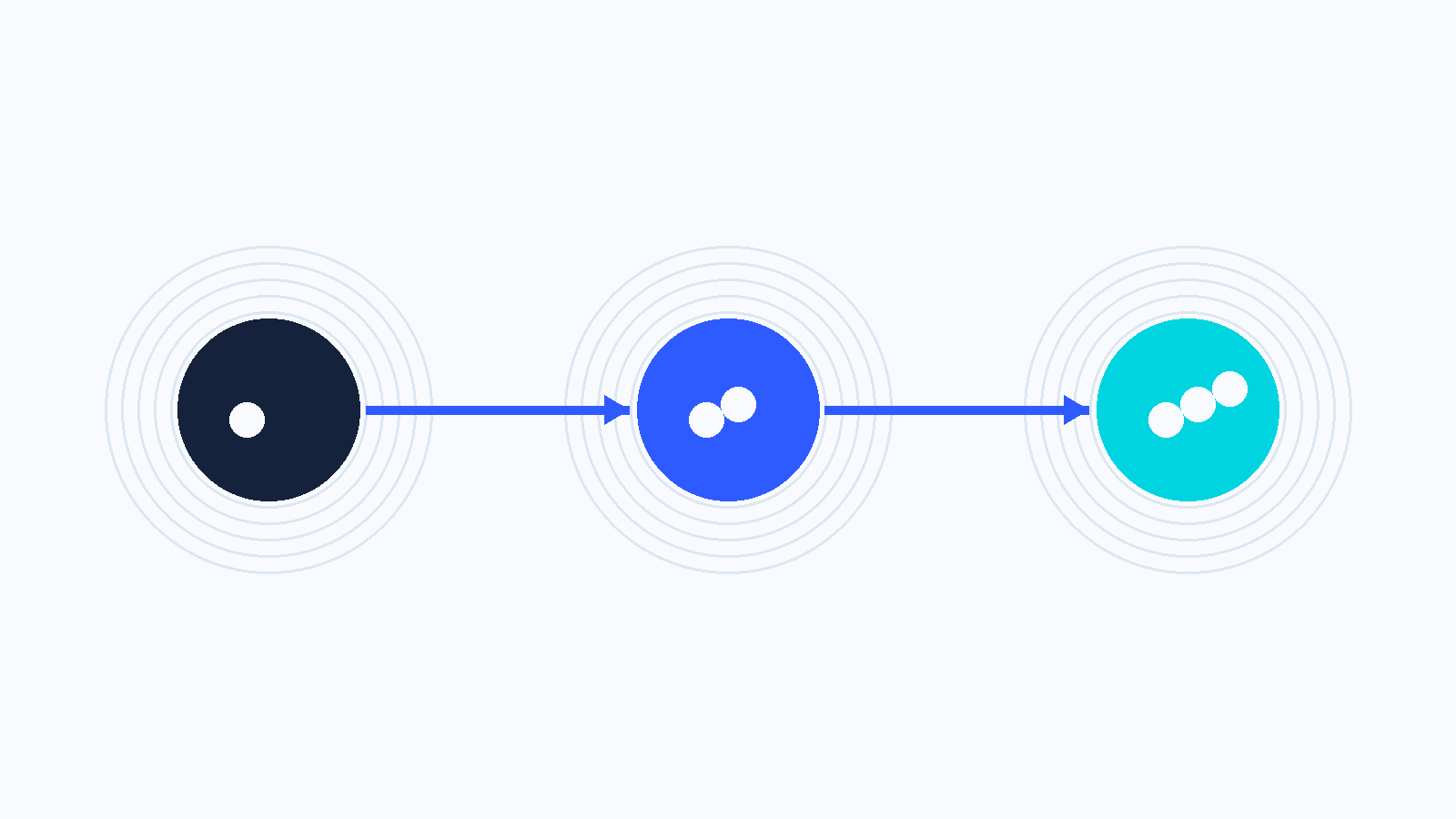
First, validate the measured demand
Check that the keyword bundles reflect the brand or products the campaign is intended to promote. Review the relative lift, confidence interval and statistical significance before drawing a conclusion.
A lift estimate for broad, loosely related terms may be less actionable than one for specific commercially relevant searches.
Second, evaluate the cost of generating demand
Inspect the measurement slice's ad cost and, where available, normalized incremental searches per cost. Compare campaigns only where study designs, terms and measurement conditions support a meaningful comparison.
A lower estimated cost per incremental search is potentially useful, but it does not imply a lower CAC.
Third, investigate downstream outcomes
Assess whether the business also observes qualified search visits, leads, new-customer orders and contribution margin. Use those signals to understand where additional demand might matter commercially.
These downstream observations are not a causal extension of the Search Lift result. If the decision involves substantial budget, consider a suitable Conversion Lift study or another defensible incrementality design.
Our guide to decision-oriented KPIs can help identify which commercial outcomes belong in the final decision.
A worked hypothetical example
Imagine an ecommerce advertiser with the following hypothetical Search Lift study results:
- Relative search lift: 20%.
- Normalized incremental searches: 4,000.
- Study-slice advertising cost: €20,000.
The descriptive ratio is €20,000 divided by 4,000, or €5 per estimated incremental search.
That figure is not CPA. It does not show whether those searches resulted in new customer purchases. Even if branded search traffic rose during the period, the business would still need an appropriate measurement design to attribute downstream sales.
Suppose the company must choose between maintaining a €20,000 awareness budget and shifting part of it into acquisition. The Search Lift result can support the case that awareness advertising generated interest. It cannot settle the profit-allocation decision by itself.
A sensible next step is to specify the missing evidence, such as incremental conversion value, contribution margin or repeat-customer economics, before expanding spend.
How to retrieve Search Lift results in API v26
Google's official experiment reporting documentation provides the query patterns and field-compatibility guidance. Check them against the API version used by your reporting integration.
1. Confirm account and study access
Google states that the customer ID must be on an allowlist managed by Global Product Solutions. Contact your Google representative or GPS contact before building a Search Lift integration.
Availability and study requirements can vary. The API update does not replace Search Lift eligibility checks.
2. Retrieve configured keyword bundles
The SearchLiftKeywordBundle resource is read-only through the API. Queryable fields include resource name, bundle ID, source and status. The repeated keywords field cannot be selected through GAQL.
Keyword bundles are configured in the Google Ads interface or through Google representatives or GPS.
3. Retrieve the study metrics
Use LiftMeasurementConfig to retrieve the results. The following query illustrates the documented pattern. Replace CONFIG_ID with a real study configuration ID:
SELECT
  lift_measurement_config.lift_measurement_config_id,
  segments.search_lift_keyword_bundle,
  segments.search_property,
  metrics.relative_search_lift,
  metrics.relative_search_lift_p90_lower_bound,
  metrics.relative_search_lift_p90_upper_bound,
  metrics.incremental_searches_p_value,
  metrics.search_lift_cost_micros,
  metrics.search_lift_impressions,
  metrics.normalized_incremental_searches
FROM lift_measurement_config
WHERE lift_measurement_config.lift_measurement_config_id = CONFIG_ID
Google's documentation also explains how to discover the relevant configuration ID using lift_measurement_config.
4. Check segmentation compatibility
The API supports breakdowns by keyword bundle and search property, including Google Search and YouTube. However, segments.search_property cannot be combined with device, age-range or gender segments. Such combinations fail API query validation.
Separate incompatible cuts into distinct queries rather than assuming all segmentation fields can be mixed.
5. Retain study context
Preserve the study identifier, keyword bundle, search property, date context, estimates, intervals and p-value alongside exported results. Do not build executive dashboards around a single lift number with the confidence interval hidden.
Practical limitations that affect decisions
Google's Search Lift setup guide explains access and setup requirements, including selecting relevant terms and considering budget recommendations.
Keyword selection matters. A study dominated by generic terms can be difficult to interpret because much of the demand may exist independently of advertising exposure.
Reporting also has limits:
- Scope: Results apply to the measured study, terms and eligible population.
- Outcome: Additional searches are a behavioural signal, not a revenue measure.
- Precision: Estimates should be evaluated with their uncertainty.
- Availability: Study access must be confirmed for the advertiser.
- Causality: The study estimates effects on search activity, not the causal impact of those searches on subsequent purchases.
The commercial question is whether the study changes an investment decision. If it does not, further API implementation may add reporting complexity without improving budget allocation.
What growth teams should do now
If your organisation already runs Search Lift studies, audit the new API v26 fields, confirm account eligibility, and update reporting to retain uncertainty and segmentation context. Define in advance which result would change a spend decision.
If you cannot access Search Lift, do not build an integration around unavailable metrics. Start with the business question and choose a feasible measurement method.
For most executive discussions, the useful conclusion is conditional: advertising created measurable search demand, and a separate analysis is needed to assess its economic value.
Frequently asked questions
What is Search Lift in Google Ads?
Search Lift estimates the incremental search activity associated with advertising exposure by comparing exposed users with an unexposed control group. It measures selected search behaviour rather than incremental revenue.
Is Search Lift reporting available to every Google Ads advertiser?
No. Google's API documentation specifies an allowlist for customer IDs and advises contacting a Google representative or Global Product Solutions. Study access and eligibility should be checked separately.
What is the difference between Search Lift and Conversion Lift?
Search Lift estimates extra search activity. Conversion Lift estimates incremental conversion outcomes. They address different stages of advertising impact and should not be treated as interchangeable proof of profitability.
Does positive Search Lift mean the campaign is profitable?
No. A positive Search Lift estimate supports increased search activity under the study design. Profitability requires separate evidence about incremental customers, conversion value, margin and advertising costs.
Can Google Ads API v26 create Search Lift keyword bundles?
No. Google describes the new SearchLiftKeywordBundle resource as read-only in the API. Bundle configuration happens through the Google Ads interface or Google representatives.

Sima Damar Beygu
Founder of ConversionNest. 10+ years in growth marketing, managing 300K euro monthly media budgets and scaling acquisition across 15+ markets. Google and Meta certified.
Sima on LinkedInGoogle Ads Performance by stage: a measurement guide
Google Ads has added video impressions to conversion paths and introduced a Performance by stage card. Learn how to interpret the metrics without overstating advertising impact.
Metrics that Matter: Choosing KPIs That Change a Decision
Most marketing reports track everything and decide nothing. The skill is not measuring more. It is choosing the few numbers that change what you do next.

Meta's new brand ads: what growth teams should test
Meta introduced Ads Super Burst, First Impression Ads, expanded Reels Trending Ads and Aggregated View Time. Assess their availability and commercial value.