Google Ads Learning Status Ends in 7 Days. Performance May Not.
Google's updated Smart Bidding guidance separates the seven-day Learning status from performance stabilization. Here is when advertisers should evaluate results.

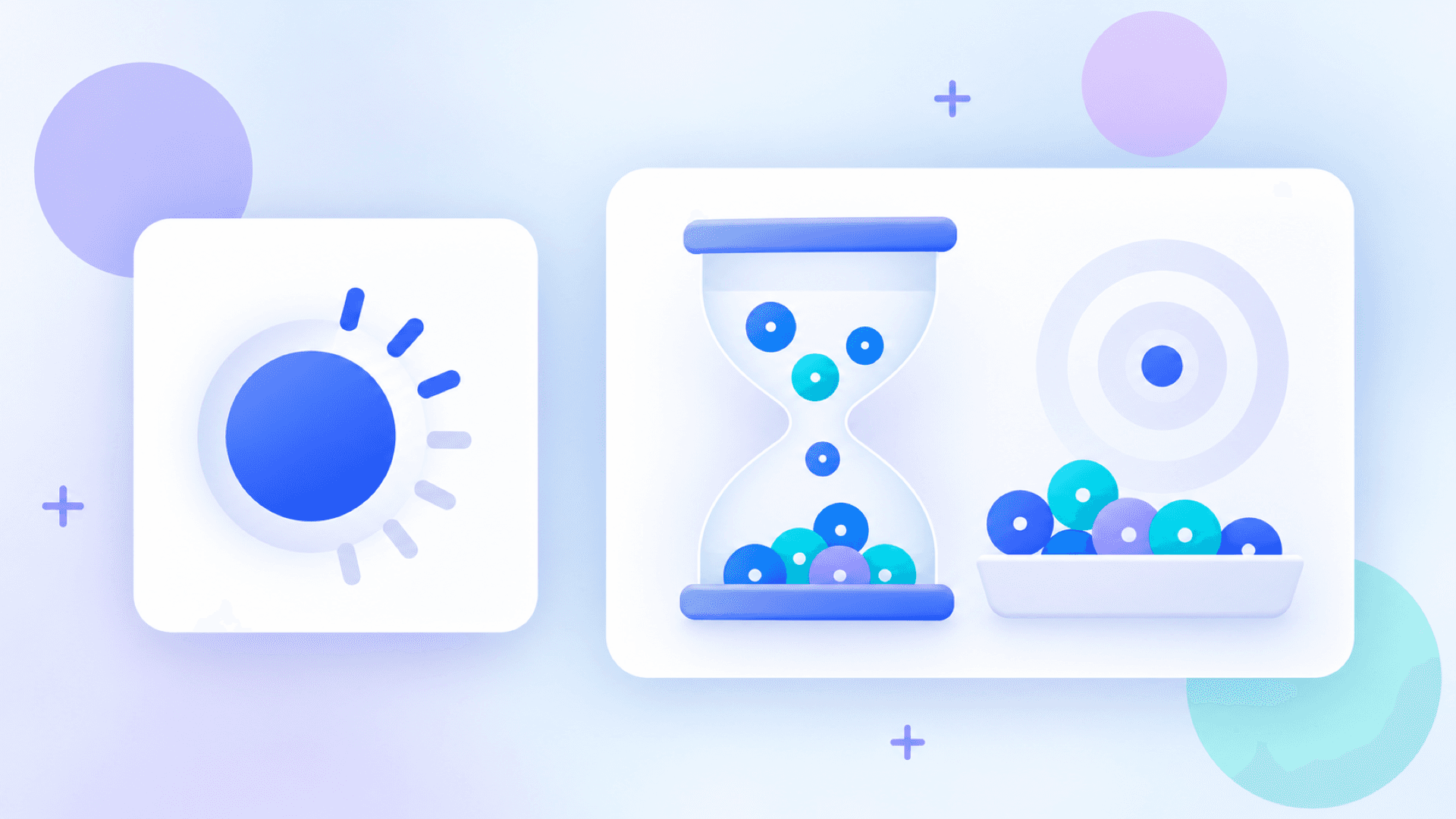
Google updated its Smart Bidding learning documentation in October 2026, clarifying that the visible Learning status in Google Ads lasts no more than seven days. Campaign performance may still need longer to stabilize after a change.
That distinction matters when you evaluate CPA, ROAS and conversion volume. A campaign can leave Learning status before enough conversion data has arrived to support a reliable decision. The practical question is whether the strategy has had enough time and mature data to respond.
What changed in Google's Smart Bidding documentation?
On October 21, 2026, Search Engine Roundtable reported a substantial rewrite of Google's Smart Bidding learning documentation.
Google's revised Smart Bidding learning page separates the visible status from performance convergence more clearly. As checked on October 22, 2026, Google states that:
- Learning status: The visible indicator lasts no more than seven days.
- Structural changes: A new strategy, composition changes and significant conversion goal changes can trigger Learning.
- Other changes: Budgets, bidding targets, creatives and targeting settings do not trigger Learning.
- Performance convergence: A strategy typically takes one to two conversion cycles to move towards a new goal.
This is a documentation update. It does not prove that Google launched a new bidding algorithm on October 21 or changed behaviour in every account.
Does Smart Bidding finish learning after seven days?
No. Google's seven day statement applies to the visible Learning status, not to all ongoing adaptation.
Google explains that Smart Bidding continues learning from new information after the status disappears. The system uses historical and incoming conversion data to adjust auction decisions. Performance usually converges towards a changed goal within one to two conversion cycles, depending on conversion volume, delay and campaign constraints.
There are two timelines:
- Status timeline: How long Google Ads displays Learning.
- Performance timeline: How long the strategy needs to approach its new objective.
A campaign showing Active may still be adjusting to a recent target change. A campaign showing Learning can still serve ads. Neither status proves that the commercial objective is being met.
Which changes trigger Learning status?
Google's revised guidance identifies three categories.
A new bidding strategy
A recently created or reactivated bid strategy can display Learning. Historical conversion data remains available, so a new strategy does not necessarily begin without useful information.
A composition change
Adding or removing campaigns, ad groups or keywords from a bid strategy can trigger Learning. These changes alter the traffic and structure contributing to the strategy.
A significant conversion goal change
A meaningful change to the conversion goals or actions used for optimization can also trigger Learning. Google does not provide one numerical threshold for what counts as significant, so inspect the actual status instead of assuming every conversion setting change has the same effect.
Which changes do not trigger Learning status?
Google says changes to budgets, bidding targets, creatives and targeting settings do not trigger Learning status or erase historical bidding data. Targeting settings include locations, audiences and languages.
An unchanged status does not mean the change has no performance effect. Lowering a Target ROAS can alter auction bidding immediately, while the campaign takes time to converge without showing Learning. Creative changes can affect response rates even though the badge remains unchanged.
ConversionNest's view: The Learning badge should not be your only signal for deciding whether a campaign change needs observation. A change log and a conversion cycle based evaluation window provide better evidence.
Google's help pages still leave an open question
Google's documentation was not fully consistent when checked on October 22, 2026. The updated Smart Bidding learning page lists a new strategy, composition change and goal change as triggers.
Google's separate bid strategy statuses page still lists setting change as a possible reason. It also refers to four reasons while presenting three in the visible list.
This discrepancy prevents a definitive conclusion about every status reason shown in every account. Until Google reconciles the pages, use the account interface to identify the reported reason. Do not treat the rewrite as proof of a product wide behavioural change.
How long should you wait before evaluating performance?
Google recommends allowing one to two conversion cycles for performance to converge towards a changed goal. After that adjustment period, Google recommends evaluating performance over two conversion cycles or two weeks, whichever is longer, while accounting for conversion delay.

Google's conversion cycle guidance defines the cycle as the time between an ad click and the resulting conversion. For imported conversions, it also includes the time required for the event to appear in the account.
A business with same day purchases has a different evaluation timetable from a B2B company that imports qualified opportunities several days after the click. The calendar should reflect the conversion process, not the Learning badge.
A hypothetical Target ROAS example
Consider a hypothetical ecommerce advertiser with a 500% Target ROAS. Most conversions arrive within seven days. The advertiser lowers the target to 400% to pursue more conversion volume.
Google's documentation indicates that the target can influence bidding immediately without triggering Learning status. If the advertiser evaluates after two days, purchases from recent clicks may still be missing. The change could appear weaker than mature reporting eventually shows.
The advertiser should first allow roughly one to two conversion cycles for convergence. The evaluation window should then cover at least two conversion cycles or two weeks, whichever is longer, with an allowance for incomplete reporting.
These figures are hypothetical, not a ConversionNest client result. The final decision should consider conversion value, contribution margin and acceptable acquisition economics.
A practical change review process
Record the change and its purpose
Document the date, previous setting, new setting and expected business outcome. A lower Target ROAS may aim to increase profitable order volume rather than improve reported ROAS.
Check the actual status
Inspect the current bid strategy status and any reason shown. The absence of Learning does not establish that the campaign has stabilized.
Check conversion delay
Review how long conversions take to appear. Include reporting lag for imported conversions.
Separate adjustment time from evaluation time
Allow the strategy to respond, then assess it over a mature reporting window. Avoid repeatedly changing targets before the earlier adjustment can be evaluated.
Judge the intended business outcome
Compare performance with the objective recorded before the change. For Target ROAS, consider value, spend and margin. For lead generation, inspect qualified leads and downstream outcomes where reliable data exists.
Our guide to choosing useful KPIs explains why every metric should support a specific decision.
When should you intervene early?
Waiting makes sense when valid data is arriving and normal conversion delays explain incomplete results. It does not make sense when an operational problem creates material risk.
Investigate early when conversion tracking is broken, optimization uses the wrong primary goal, spend exceeds a defined risk threshold, or targeting and destinations are demonstrably incorrect. These problems need correction. They are different from ordinary variation while Smart Bidding adapts.
For a wider investigation, use our structured diagnosis for sudden advertising performance drops.
What advertisers should do now
Replace fixed seven day waiting rules with evaluation windows based on actual conversion cycles. Keep a change log, preserve consistent conversion measurement and judge the result against the intended commercial outcome.
The cleared Learning badge describes an interface status. Mature conversion data tells you whether the change is working.
Frequently asked questions
How long does Google Ads Learning status last?
Google's updated documentation says the visible Learning status lasts no more than seven days. Performance may take longer to stabilize, typically one to two conversion cycles.
Does changing Target ROAS restart Learning?
Google says changing a bidding target does not trigger Learning status or erase historical data. The strategy still adjusts to the new target, so performance may take time to converge.
Does increasing a Google Ads budget reset learning?
Google's updated guidance says budget changes do not trigger Learning status. They can still affect delivery and performance, so evaluate the commercial impact using mature conversion data.
Can I evaluate Smart Bidding after seven days?
Seven days is not a universal evaluation window. Google recommends allowing one to two conversion cycles for convergence, then evaluating over two conversion cycles or two weeks, whichever is longer, while accounting for delay.

Sima Damar Beygu
Founder of ConversionNest. 10+ years in growth marketing, managing 300K euro monthly media budgets and scaling acquisition across 15+ markets. Google and Meta certified.
Sima on LinkedIn
Why ad performance suddenly drops: a structured diagnosis
A sudden decline needs a timeline and a verified failure point. Use this diagnostic sequence before changing budgets, targeting or creative.

Meta product browsing may change where ad clicks land
Meta is switching product browsing on for existing ads unless advertisers opt out. Audit catalogue accuracy, post-click measurement and commercial impact before deciding.
Google Ads Lead Form Qualifying Responses: Audit the Bidding Signal
Qualifying responses can create a cleaner Google Ads lead signal. Learn how to audit the form logic, CRM delivery and downstream value before bidding uses it.