How to find AI search content opportunities using Bing Webmaster Tools
A workflow for converting Bing's AI citation data into content updates that support real customer decisions.

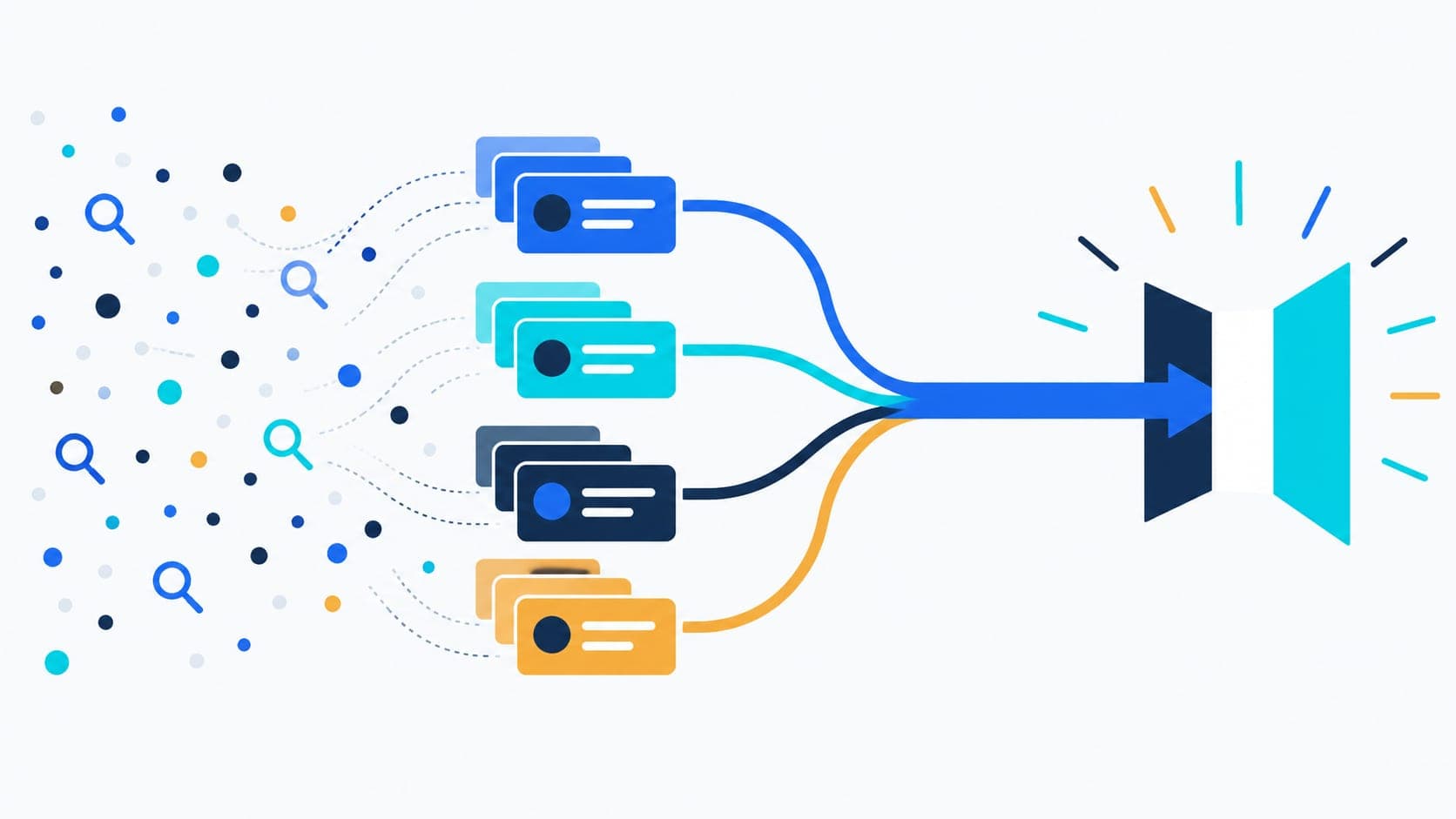
Bing Webmaster Tools can reveal AI search content opportunities by showing which pages are cited, the grounding queries behind those citations and the topics where your site has partial visibility. Use those signals to find evidence gaps, then validate the opportunity against customer demand and business value.
The useful output is a prioritised content brief, not a longer keyword list. Citation data describes supported Microsoft AI experiences and should be treated as directional.
What AI data is available in Bing Webmaster Tools?
Microsoft launched AI Performance in Bing Webmaster Tools in public preview on February 10, 2026. The report covers citation activity across Microsoft Copilot, AI-generated summaries in Bing and select partner integrations.
The original report includes:
- Total citations displayed as sources in supported AI answers.
- Average unique pages cited from the site per day.
- Sampled grounding queries used to retrieve cited content.
- Citation activity for individual URLs.
- Visibility trends over time.
Microsoft says citation counts do not indicate placement, authority or the role a page played inside an answer. Grounding queries are a sample rather than a complete demand record.
On June 16, 2026, Microsoft added Intents, Topics, Citation Share and Compare in global preview. Citation Share is the percentage of citations attributed to a site for a grounding query across the citations observed by the report. Microsoft describes it as observational, not a ranking system or traffic share.
Start with pages that already earn citations
Existing cited pages provide the clearest evidence that Microsoft systems can retrieve and use something from the site. Export or record the leading URLs, grounding queries, topics and intent groups for a consistent date range.
For each cited page, ask:
- Which question does the page answer?
- What type of evidence does it supply?
- Is the citation associated with discovery, comparison, research, shopping or another intent?
- Are adjacent customer questions answered on the same page?
- Does the page lead to a relevant product, service or next step?
- Are the facts current and supported?
A cited page can become the centre of a topic cluster, but do not split every adjacent query into a separate article. Some opportunities belong as a new section, comparison table, method note or product clarification on the existing page.
Use grounding queries as evidence of retrieval intent
A grounding query is a phrase used by an AI system to retrieve information for an answer. It may differ from the user's original wording, so treat it as retrieval evidence rather than a complete record of what the person typed.
Group grounding queries by the decision they support:
- Discovery: Finding categories, suppliers or approaches.
- Comparison: Choosing between products, services or methods.
- Validation: Checking claims, specifications, policies or trust signals.
- Implementation: Completing a task or solving a problem.
- Local and availability: Confirming place, stock, hours or service coverage.
Then map each group to an existing page. Mark whether the page answers the query completely, partially or not at all. A partial match with citations can be more actionable than a high-volume keyword where the business lacks authority or a relevant offer.
Explore Topics and Topics Portfolio
Microsoft's Topics view groups related grounding queries into broader themes. On October 2026, Bing introduced Topics Portfolio in beta to help publishers examine where citations are concentrated and where opportunity queries appear.
Microsoft says the beta uses AI-generated classification and ecosystem aggregates. Topic classification can be imperfect, low-data topics may not appear and volumes are shown as ranges. Branded competitor queries can also appear as opportunities.
That means every suggested opportunity needs a human review. Ask:
- Does the topic match an offer or expertise the business can support?
- Is the opportunity query relevant to a real customer decision?
- Can the site add evidence rather than a generic summary?
- Is an existing page the better place for the answer?
- Can the team maintain the information?
- Would the resulting visit have a credible commercial path?
Reject topics that are merely adjacent to the category. Relevance without business fit creates content inventory, not growth.
Build a citation gap map
Create a simple working table:
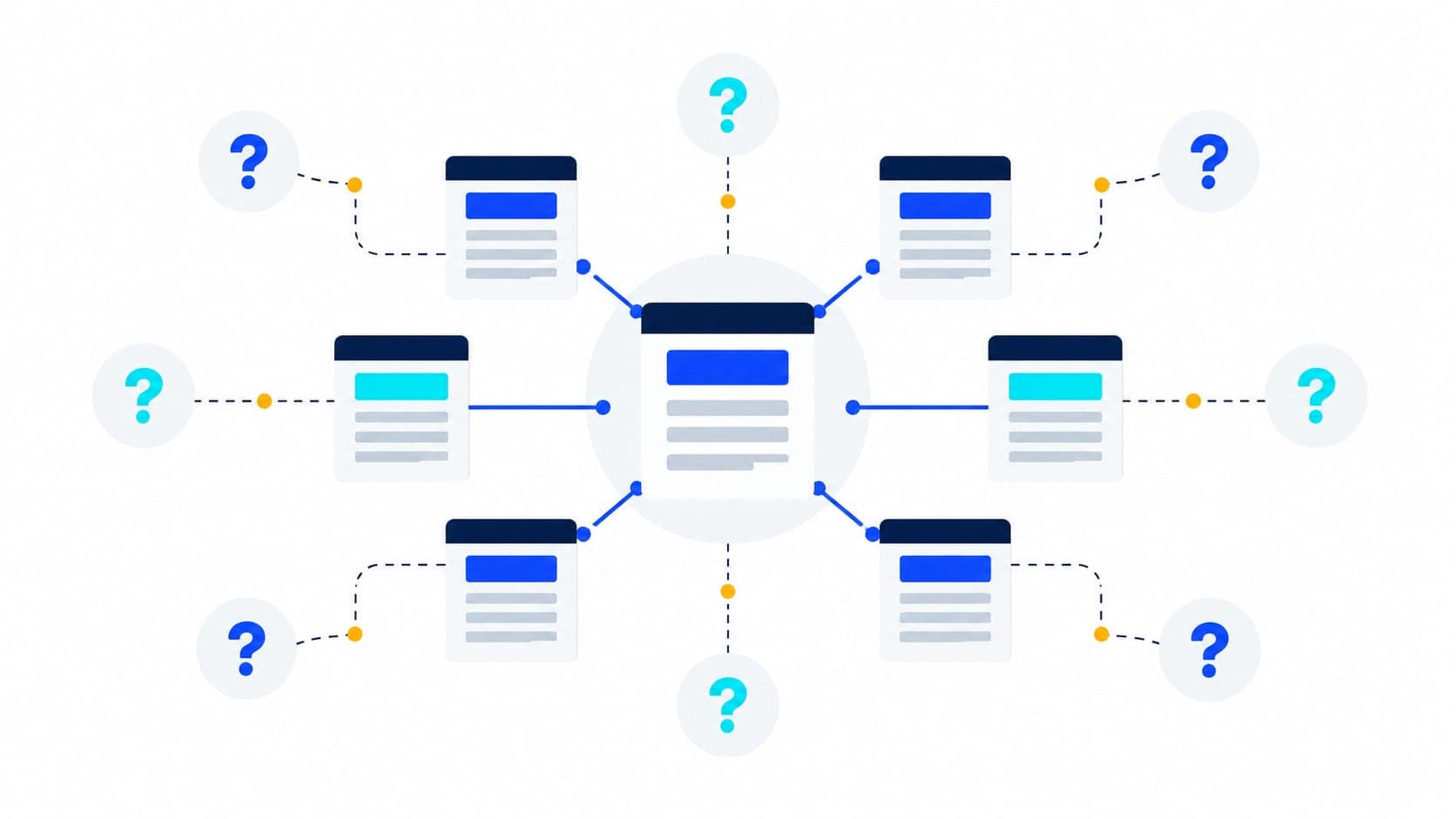
Topic | Grounding query | Current page | Current citation | Evidence gap | Recommended action |
|---|---|---|---|---|---|
Product comparison | Query group | Existing guide | Present but low | No decision criteria | Add a comparison table |
Implementation | Query group | No suitable page | Absent | Missing step-by-step method | Create an implementation guide |
Policy validation | Query group | Product page | Present | Policy is outdated | Update visible facts and schema |
Local availability | Query group | Location page | Absent | Coverage is unclear | Clarify service area |
The examples are hypothetical, not client data. The table forces each opportunity to name a gap and an action.
Avoid labelling every uncited query as a content gap. The site may lack fit, evidence or authority. The answer may already be complete elsewhere on the site, or the topic may not support a commercial outcome.
Combine AI Performance with classic Bing data
AI citation signals become more useful when combined with standard Bing Webmaster Tools reports. Microsoft's Bing Webmaster Tools overview documents Search Performance, URL Inspection, Keyword Research, Site Explorer, sitemaps, Site Scan and robots.txt testing.
Use the combination to distinguish four cases:
- Cited and searched: Strengthen the page and improve its commercial journey.
- Cited but little classic demand: Validate whether the AI topic reaches a valuable audience before expanding.
- Searched but not cited: Review content completeness, evidence, structure and freshness.
- Neither searched nor cited: Confirm external demand and business fit before creating anything.
URL Inspection and Site Explorer can reveal whether a content gap is actually an indexing or crawl problem. Fix technical access before commissioning a new page for the same intent.
Turn an opportunity into a content brief
Create an evidence-led brief
- Select one topicChoose a topic that matches the offer, customer decision and available expertise.
- Inspect the cited pagesReview your cited URLs and other sources visible in representative answers. Identify what each contributes.
- Define the missing evidenceSpecify the data, method, comparison, product fact or limitation the new or updated page will provide.
- Choose the right page actionUpdate an existing page, consolidate overlapping pages or create a new one only when the intent deserves a separate destination.
- Plan the commercial pathDefine the relevant next step and how qualified outcomes will be recorded.
- Record the baselineSave the current citations, grounding queries, Search performance and business metrics before publishing.
A good brief states the primary decision, intended reader, evidence, sources, page relationship, maintenance owner and measurement plan. It does not promise a citation.
Measure the outcome without overstating it
After publishing or updating, use Compare to observe citation changes over an appropriate period. Keep the same market, topic selection and date logic where possible.
Measure in layers:
- Indexing and technical completion.
- Citations, cited pages and topic coverage.
- Referral sessions and engaged visits.
- Qualified leads, orders, assisted journeys and margin.
- Incremental impact only when a suitable test supports it.
Our AI search visibility measurement guide explains why citations and commercial growth should remain separate in reporting.
Changes can correlate with content work without being caused by it. Microsoft notes that citation patterns can shift because of models, competitors, freshness and user demand.
Common mistakes
Do not treat grounding queries as a complete keyword database. They are sampled retrieval phrases for supported AI experiences.
Do not chase the largest topic without checking business fit. A smaller, decision-rich opportunity may be more valuable.
Do not publish one page for every phrase. Group queries by intent and improve the best destination.
Do not copy cited competitors. Identify the evidence their pages supply, then decide what your business can add honestly.
Do not turn Citation Share into revenue share. Microsoft explicitly describes it as an observational citation metric.
Do not ignore technical reports. An uncited page may need access or indexing work rather than more copy.
A weekly opportunity routine
Set a weekly or fortnightly review based on data volume. Start with changed topics and cited pages, review opportunity queries, validate them against Search data and select no more work than the team can maintain.
Keep rejected ideas with a reason. This prevents the same irrelevant topics from returning to the backlog each month.
The value of Bing Webmaster Tools is the connection between retrieval signals and page-level evidence. Use it to decide what to improve, then judge the work by qualified demand and business outcomes.
Frequently asked questions
What is a grounding query in Bing Webmaster Tools?
It is a phrase an AI system used to retrieve content that was cited in a supported answer. Microsoft says the report provides a sample, so it is not the same as a complete user-query log.
Does Citation Share show AI search market share?
No. Microsoft says Citation Share is observational and does not represent traffic share or a ranking score.
Is Topics Portfolio available to every site?
Microsoft launched it in beta in October 2026. Low-data topics may not appear, and the company advises treating classifications and ranges as directional.
Should every opportunity query become a new article?
No. Update an existing page when it already serves the intent. Create a new page only when the decision, evidence and commercial path justify a separate destination.

Sima Damar Beygu
Founder of ConversionNest. 10+ years in growth marketing, managing 300K euro monthly media budgets and scaling acquisition across 15+ markets. MSc in Digital Marketing from University College Dublin. Google and Meta certified.
Sima on LinkedIn
How to get your business recommended by ChatGPT
ChatGPT recommendations cannot be guaranteed. Build eligibility, evidence and measurement around the buyer decisions your pages need to support.

How to Measure AI Search Visibility Without Mistaking Visibility for Growth
AI impressions and citations tell you whether your brand is being surfaced not whether AI search is driving growth. Here’s a practical framework for measuring what actually matters.

Performance Max sourced videos: check what you approve
Performance Max can source videos from approved online content. Review the permissions, ownership and commercial trade-offs before leaving the setting enabled.