How to get your business recommended by ChatGPT
A practical guide to making your business discoverable, credible and useful enough to be considered in ChatGPT search.


- ChatGPT recommendations cannot be bought or guaranteed. A business first needs crawlable, reliable pages that answer a specific customer decision.
- OAI-SearchBot controls eligibility for ChatGPT search, while GPTBot controls potential model training. The two settings are independent.
- Recommendation content needs verifiable facts, clear comparisons and third-party evidence, not pages written to mention ChatGPT repeatedly.
- Measure citations, referral visits and qualified outcomes separately because visibility does not prove commercial value.
ChatGPT can recommend a business when its search systems can discover relevant public information and the answer fits the user's request. OpenAI does not publish a checklist that guarantees selection. The practical job is to make your business eligible to be found, easy to understand and credible enough to cite.
That starts with access, but access alone is not a strategy. A technically crawlable site with vague service pages gives an answer system little evidence for a recommendation. A useful page states who the offer is for, where it is available, what it costs or how pricing works, and why a buyer might choose it.
What does ChatGPT use when recommending a business?
ChatGPT search can use public web pages and third-party search providers to build an answer with linked sources. OpenAI's search help documentation says results are ranked using multiple factors intended to surface relevant, reliable information, while placement is not guaranteed.
For publishers, OpenAI's official FAQ says any public website can appear in ChatGPT search. It recommends allowing OAI-SearchBot so content can be discovered, surfaced and cited. That is an eligibility requirement, not a promise that a page will be selected.
Recommendations can also depend on the wording and context of the user's request. A broad prompt such as "best accountant" creates a different evidence need from "accountant for a Dublin SaaS company expanding into Germany." Your content has to support the specific decision, not merely the category.
Make the site eligible for ChatGPT search
OpenAI documents separate crawlers for separate purposes. Its crawler documentation identifies OAI-SearchBot as the crawler used to surface websites in ChatGPT search. GPTBot is used for content that may support model training.
Check four layers before changing content:
- Robots.txt: Confirm that OAI-SearchBot is not disallowed from pages you want surfaced.
- CDN and firewall rules: A permissive robots.txt file does not help if bot protection returns a 403 response.
- Page response: Important pages should return a stable 200 response without login, consent or location barriers that hide the main content.
- Index controls: Review noindex and snippet controls. A crawler must be able to read the page before it can observe those controls.
OpenAI says crawler settings may take about 24 hours to adjust after a robots.txt update. Inspect server and CDN logs after the change instead of assuming the rule worked.
Build pages around real recommendation decisions
A recommendation page should help someone choose. Start with the questions that change the decision, then decide whether the answer belongs on a service page, product page, comparison, location page or supporting guide.
Useful decision information often includes:
- Fit: The customer, use case, company size or problem the offer is designed for.
- Boundaries: Regions served, exclusions, capacity, delivery conditions and prerequisites.
- Commercial facts: Transparent prices where practical, or a clear explanation of how a quote is formed.
- Evidence: Original data, documented methodology, product specifications, policies and named sources.
- Alternatives: Honest situations where another option is better.
- Freshness: Dates and ownership for facts that can change.
Avoid creating dozens of near-identical pages for prompt variations. Thin location and comparison pages can make the site harder to trust and maintain. One complete page with clear sections usually provides a stronger source than several pages that repeat the same claims.
Create evidence that another source can verify
A business saying it is the best is weak evidence. A recommendation becomes easier to support when the web contains consistent facts from the business and independent sources.
Start with first-party accuracy. Keep names, addresses, product details, availability, returns and service coverage consistent across the website and relevant business profiles. For ecommerce, OpenAI's shopping documentation says product selection can consider structured product metadata, price, reviews and other third-party content. Merchant ranking can consider availability, price, quality and whether the seller is the maker or primary merchant.
Then examine independent evidence. Reputable reviews, trade coverage, partner directories and expert references can help establish that the business exists and that its claims are not self-authored. Do not manufacture mentions or publish disguised endorsements. OpenAI gives no basis for claiming that paid link placement or synthetic reviews improve recommendations.
Make important facts easy to extract
Pages written for real customers can also be easy for an answer system to interpret. Use descriptive headings, short direct answers and visible facts. Keep important details in HTML text rather than only in images, videos or downloadable documents.
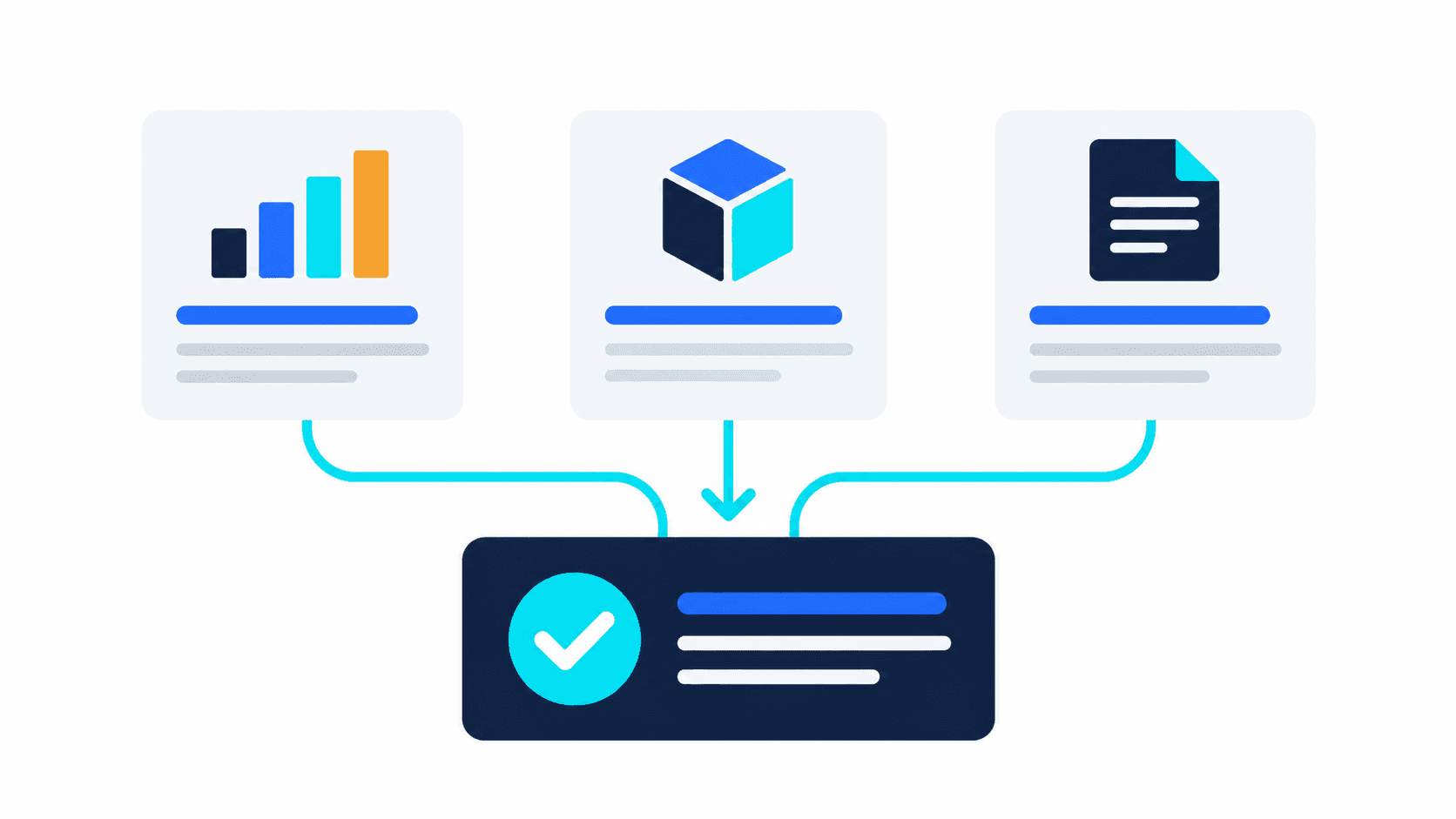
A practical pattern is:
- Answer the question in the first paragraph.
- State the conditions and limits.
- Show the evidence or calculation.
- Explain who should choose the option.
- Link to the policy, product or methodology page that supports the claim.
Structured data can clarify entities and page content when it accurately matches visible information. It cannot rescue unclear or unsupported copy. Treat schema as a consistency layer, not a recommendation switch.
Test prompts without turning them into a ranking report
A prompt sample can reveal how a brand is described, which sources are cited and where factual gaps exist. It cannot prove a stable position because answers can vary with wording, location, model changes and conversation context.
Build a small, repeatable prompt set around commercial decisions:
- Category discovery prompts without the brand name.
- Comparison prompts that include buyer constraints.
- Problem-led prompts that describe a real use case.
- Branded prompts that test factual accuracy.
- Local or product prompts where geography and availability matter.
Record the date, model or product surface, location assumptions, answer, cited sources and whether the brand appeared. Keep the prompt wording stable when comparing periods. Change one variable at a time.
The output is a diagnostic record, not market share. A brand appearing in five prompts does not mean it owns a measurable share of customer demand.
Measure whether recommendations create value
OpenAI says ChatGPT adds utm_source=chatgpt.com to referral URLs from search results. Use that parameter alongside referrer data, landing-page engagement and downstream CRM outcomes.
Separate three levels of evidence:
Level | What to record | What it does not prove |
|---|---|---|
Visibility | Brand mentions and citations in a fixed prompt set | Stable ranking or demand |
Traffic | Sessions and landing pages from ChatGPT referrals | Incremental acquisition |
Business outcome | Qualified leads, orders, margin and assisted journeys | Causation without a test |
Our AI search visibility measurement guide explains how to keep citation metrics separate from growth. This matters when an agency report combines prompts, traffic and revenue into one proprietary score.
What should you avoid?
Do not promise a guaranteed ChatGPT recommendation. OpenAI explicitly says placement is not guaranteed.
Do not add unsupported claims because they sound quotable. A concise false statement is still false, and it creates legal and reputational risk.
Do not block normal users with a page designed only for crawlers. The source should be useful and consistent for both audiences.
Do not treat one answer as a permanent result. Recommendation systems, source sets and user context change.
A practical 30-day sequence
Build recommendation readiness
- Verify accessCheck OAI-SearchBot in robots.txt, CDN rules and server logs. Confirm priority pages return the content you expect.
- Map buyer decisionsChoose the five to ten questions that affect shortlisting, comparison or purchase. Match each question to an existing page or a genuine content gap.
- Strengthen the evidenceAdd visible facts, limitations, source links, policies and methodology. Correct inconsistent entity and product information across owned profiles.
- Establish a baselineRun a fixed prompt sample, record citations and connect ChatGPT referral traffic to qualified outcomes.
- Improve one clusterUpdate the pages around one decision area. Recheck access, citations and business outcomes before expanding the programme.
ChatGPT recommendations are an outcome of eligibility, relevance and evidence. The defensible route is to fix access, publish decision-grade information and measure commercial impact without claiming control over placement.
Frequently asked questions
Can you pay to be recommended by ChatGPT?
OpenAI does not describe organic ChatGPT search placement as something a business can buy, and it says placement is not guaranteed. Treat any guaranteed recommendation offer as a claim that needs strong evidence.
Should I allow GPTBot to appear in ChatGPT search?
OpenAI documents GPTBot and OAI-SearchBot as separate controls. OAI-SearchBot manages search eligibility, while GPTBot manages potential training use.
How long does a robots.txt change take for ChatGPT?
OpenAI says its systems may take about 24 hours to adjust after a robots.txt update. Crawl access does not guarantee that a page will appear.
Does schema make ChatGPT recommend a business?
OpenAI does not publish a special schema that guarantees recommendations. Use accurate structured data to support clear, visible facts, not as a replacement for useful content.

Sima Damar Beygu
Founder of ConversionNest. 10+ years in growth marketing, managing 300K euro monthly media budgets and scaling acquisition across 15+ markets. MSc in Digital Marketing from University College Dublin. Google and Meta certified.
Sima on LinkedIn
How to Measure AI Search Visibility Without Mistaking Visibility for Growth
AI impressions and citations tell you whether your brand is being surfaced not whether AI search is driving growth. Here’s a practical framework for measuring what actually matters.

Why paid ads generate leads but not qualified opportunities
Cheap form submissions can conceal weak pipeline. Trace acquired leads through qualification and sales before changing targeting or increasing budget.

Why shipping costs make customers leave checkout
Customers leaving when shipping costs appear? Learn how to diagnose checkout abandonment, improve delivery transparency and protect margins.