Why paid ads generate leads but not qualified opportunities
A lead-quality audit that connects advertising inputs, CRM evidence and the sales process.


- Judge lead quality using consistent stages and mature acquisition cohorts.
- Separate invalid submissions, poor fit and sales-process failures before changing campaigns.
- Verify that CRM outcomes reach the intended conversion action with usable identity and timing.
Paid ads can generate enquiries without qualified opportunities when the offer attracts the wrong buyers, the conversion signal rewards volume, CRM feedback is incomplete or sales follow-up fails. Trace mature lead cohorts through the sales process before changing targeting. A low cost per form submission does not establish efficient customer acquisition.
The investigation should separate lead quality from sales execution and measurement quality. An uncontacted lead is different from a verified poor-fit enquiry, even when neither has become an opportunity.
Agree what qualifies before judging a campaign. Otherwise, marketing and sales may be comparing different versions of success.
Define the commercial stages
A submitted form records an enquiry. Qualification should establish the agreed evidence of fit, intent and eligibility. An opportunity should represent the sales team's documented threshold for a credible commercial process.
Google's qualified and converted lead documentation distinguishes offline-qualified leads from later steps in the lead-to-sale process. The business must still define what those stages mean.
Write entry criteria, owner and timestamp for each CRM stage. Keep stage changes auditable and retain rejection reasons.
Stage | Evidence required | Question it answers |
|---|---|---|
Enquiry | Valid submission with a stable lead reference | Did someone ask for contact? |
Reachable lead | Working contact route and recorded attempt | Can sales engage? |
Accepted lead | Agreed eligibility and fit | Is the enquiry suitable? |
Qualified opportunity | Documented sales criteria met | Is there a credible commercial process? |
Won customer | Verified agreement or revenue outcome | Did the opportunity create business value? |
Your own stage names may differ. Consistency matters more than adopting a generic funnel vocabulary.
Find where lead quality breaks
Compare acquired leads at similar ages and locate the earliest transition that weakens. Separate invalid submissions, poor-fit prospects, unreachable contacts and sales-process failures. Then inspect the campaign, offer and follow-up evidence associated with the affected cohort.
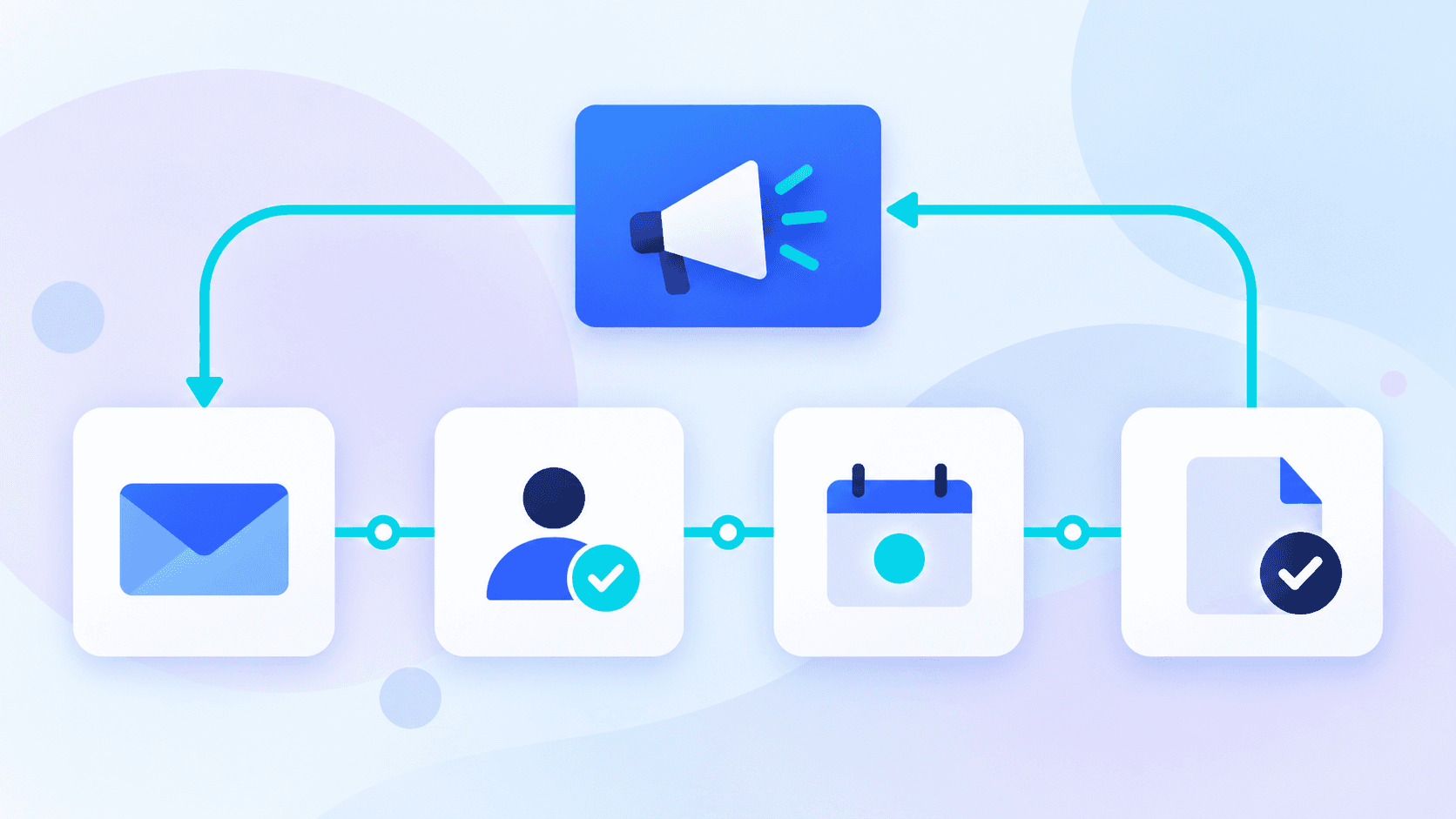
Do not divide this month's spend by opportunities created this month if many opportunities belong to older leads. That mixes acquisition periods and can misrepresent the economics.
Build a cohort view using lead creation date, campaign context, first contact, qualification result, opportunity date and eventual outcome.
Track the status of unresolved leads. They should remain visible as immature or unassessed, rather than being silently labelled poor quality.
Audit campaign intent and the offer
Inspect which promise earns the submission. Free resources, giveaways and broad eligibility can attract interest without a near-term buying need.
This may be appropriate for a nurture programme. It becomes a problem when the campaign is evaluated or optimised as if every submission were a sales-ready enquiry.
Review search terms where relevant, creative claims, location, service availability and the landing page. Confirm that the advertised proposition accurately describes who the service fits.
Make essential constraints clear before submission. A price range, geographic limitation or minimum requirement may reduce volume while helping the right buyer make a better decision.
Avoid excluding potential customers based only on incomplete early data. Test qualification changes against mature opportunity and revenue outcomes.
Check the signal used for optimisation
Identify the actual conversion action each campaign uses. A goal named Lead can represent a button click, a submitted form or a qualified CRM outcome.
Google's lead-quality best practices recommend choosing a relevant stage for bidding and returning offline outcomes regularly. Those platform recommendations should be evaluated against your volume, delay and measurement quality.
Do not optimise simultaneously towards several unweighted stages and assume the total represents more commercial success. One person can submit, qualify and close, producing several events from one acquisition journey.
Choose a signal close enough to commercial value to be meaningful, but timely and reliable enough to support the intended campaign use.
A weak late-stage signal can be less useful than a validated earlier signal. Improving feedback quality may be the next step before changing optimisation.
Inspect CRM feedback end to end
A CRM integration should be tested as a data pipeline. Check whether the intended stage changes leave the CRM, reach the correct action and are accepted with the expected time, identifiers and values.
Google's Enhanced Conversions for leads setup guide describes connecting website lead data with offline conversion imports. It specifies relevant fields and requires the website and import to use compatible information.
An enabled connector does not prove the right business event is arriving. Review rejected records, missing fields and delays.
Distinguish a valid import from a correctly matched commercial outcome. A successful request can still contain the wrong stage or amount.
Keep personal data within supported collection and upload paths. Use restricted, minimised audit records rather than circulating raw customer exports.
Separate spam from low intent
Spam, invalid contact details and genuine poor-fit enquiries are different categories. Combining them hides the appropriate repair.
For invalid submissions, inspect form validation, repeated patterns and the advertising route. Apply suitable abuse controls without creating unnecessary obstacles for legitimate prospects.
For real but unsuitable enquiries, inspect the offer and qualification criteria. The campaign may be attracting exactly the audience implied by the creative.
For relevant but early-stage prospects, decide whether a nurture route is appropriate. Do not count them as current opportunities merely to improve a marketing report.
Record evidence-based rejection reasons. A label such as Bad lead is too broad to guide a useful change.
Review sales follow-up fairly
Check assignment, first contact, contact attempts and the consistency of disposition recording. A lead that was never assigned cannot be assessed like one that completed qualification.
Compare similar cohorts across teams where appropriate. Territory, service availability and capacity can influence outcomes independently of campaign quality.
Avoid inventing a universal response-time target. Set an operational service level that fits the offer and buying process, then measure whether the team follows it.
Review a limited, appropriately authorised sample of enquiries and sales records. Look for mismatches between the advertised promise and the sales conversation.
The result should identify whether marketing, sales operations or measurement owns the next repair.
A hypothetical lead-quality comparison
Consider a hypothetical service business comparing two mature campaign cohorts. These figures are hypothetical, not a client result.
Campaign A spends €2,000 and generates 100 enquiries, of which five become qualified opportunities. Campaign B spends €2,000 and generates 40 enquiries, of which ten become qualified opportunities.
Campaign A has a €20 cost per enquiry and €400 cost per opportunity. Campaign B has a €50 cost per enquiry and €200 cost per opportunity.
This comparison does not yet prove that Campaign B creates more profitable customers. Review opportunity value, win rate, sales effort and eventual contribution before expanding spend.
It does show why selecting the cheapest form submission can point the team towards the wrong commercial outcome.
Run the lead-quality audit
Lead-to-opportunity audit
- Agree the stagesDefine valid enquiry, accepted lead, qualified opportunity and customer. Assign an owner and consistent entry criteria.
- Build mature cohortsGroup leads by acquisition period and allow the normal qualification window. Keep unresolved leads separate from rejected leads.
- Classify the lossesSeparate spam, poor fit, unreachable contacts, delayed follow-up and genuine sales losses. Retain reasons that suggest a specific repair.
- Validate the feedbackTrace representative stage changes through the import route. Check identity, time, values, acceptance and campaign use.
- Change one constraintTest a clearer offer, qualification field, targeting adjustment or follow-up process. Avoid changing the entire acquisition and sales system simultaneously.
- Judge commercial progressionCompare opportunity creation, customer outcomes and contribution for comparable cohorts. Include uncertainty when the sample is small.
Use values with discipline
Value-based optimisation requires defensible values. If you assign an expected value to a qualified lead, document the conversion-to-sale assumptions and review them against mature cohorts.
Do not present forecast pipeline as realised revenue. Track both so the campaign objective and financial report remain understandable.
A simple stable value can be more useful than a detailed score built on unreliable CRM data. Add complexity when the available evidence justifies it.
Google's lead guidance supports value-based bidding where distinct values can be assigned. The business remains responsible for determining whether those values represent commercial differences accurately.
How much form friction should you add?
Additional questions can screen unsuitable demand, but can also discourage good prospects. Ask only for information that changes routing, qualification or the buyer's decision.
Test changes against accepted opportunities, rather than celebrating a higher qualification percentage caused by collapsing enquiry volume.
For platform lead forms, our Google Ads qualifying-responses analysis explains why a qualification answer still needs validation against later outcomes.
For landing pages, the broader website checklist offers a useful review of clarity and completion barriers. Adapt its commercial principles to the lead journey.
Set the next decision around the constraint
If valid leads are missing from the CRM, repair the pipeline first. If qualified buyers fail to understand the offer, improve the proposition. If sales leaves suitable enquiries untouched, fix assignment and capacity.
A campaign can have several weaknesses. Prioritise the earliest verified break that materially affects the business, then rerun the cohort comparison.
Use our guide to decision-led KPIs to assign a clear purpose to cost per lead, cost per opportunity and realised customer contribution.
Frequently asked questions
Why do cheaper leads sometimes produce fewer sales?
A campaign may attract low-intent enquiries or optimise towards an early event with weak commercial meaning. Verify cohort outcomes and sales follow-up before assigning the cause.
Should every campaign optimise towards closed sales?
Only when the outcome is reliably recorded and arrives with suitable timeliness and volume. A validated earlier stage may be a practical interim signal.
Will adding qualification questions solve poor lead quality?
It can help when the questions address a verified fit problem. Test the effect on qualified opportunities and customers, because unnecessary friction can remove suitable demand.

Sima Damar Beygu
Founder of ConversionNest. 10+ years in growth marketing, managing 300K euro monthly media budgets and scaling acquisition across 15+ markets. MSc in Digital Marketing from University College Dublin. Google and Meta certified.
Sima on LinkedIn
Google Ads Learning Status Ends in 7 Days. Performance May Not.
Google Ads now states that Learning status lasts no more than seven days, while bidding performance may take longer to stabilize. Learn which changes trigger the status and how to set a defensible evaluation window.

Why ad performance suddenly drops: a structured diagnosis
A sudden decline needs a timeline and a verified failure point. Use this diagnostic sequence before changing budgets, targeting or creative.

Meta product browsing may change where ad clicks land
Meta is switching product browsing on for existing ads unless advertisers opt out. Audit catalogue accuracy, post-click measurement and commercial impact before deciding.